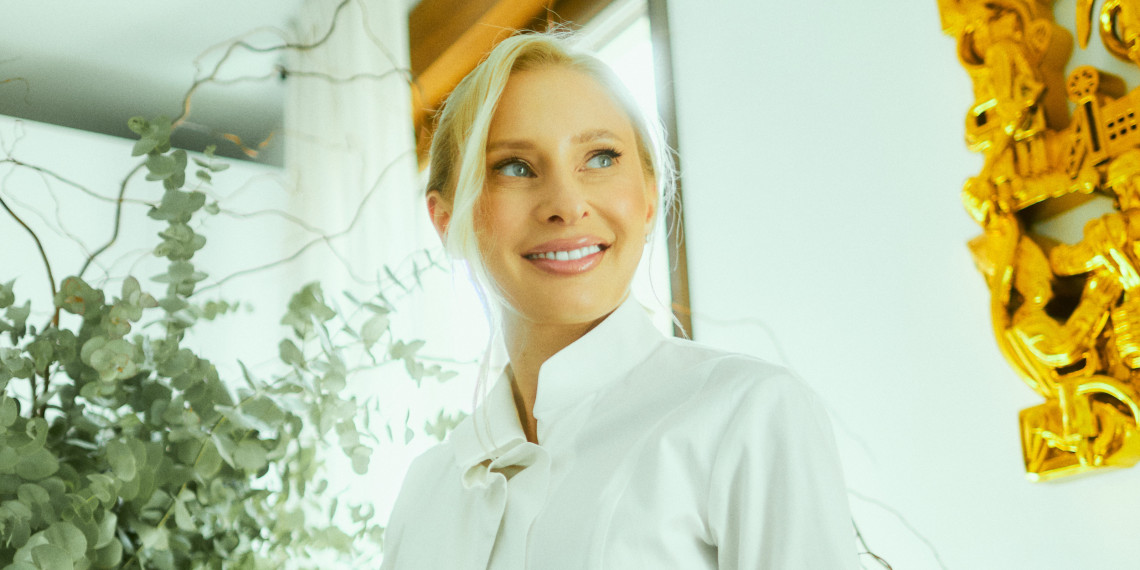
“I’m 45. I’m a mother, a friend, an entrepreneur, a partner, and a Master of Cybernetics. But above all - a woman. A Ukrainian woman,” Olga begins.
She speaks calmly and sincerely, with a confident openness you instantly recognise. There’s lightness in her voice, focus in her movements, and an energising spark in her eyes.
We talked for more than two hours. Between our online calls, a day passed - enough time for Olga to fly to Berlin. At nine the next morning, already in another city, she logged back in - refreshed, composed, carrying that same inner brightness.
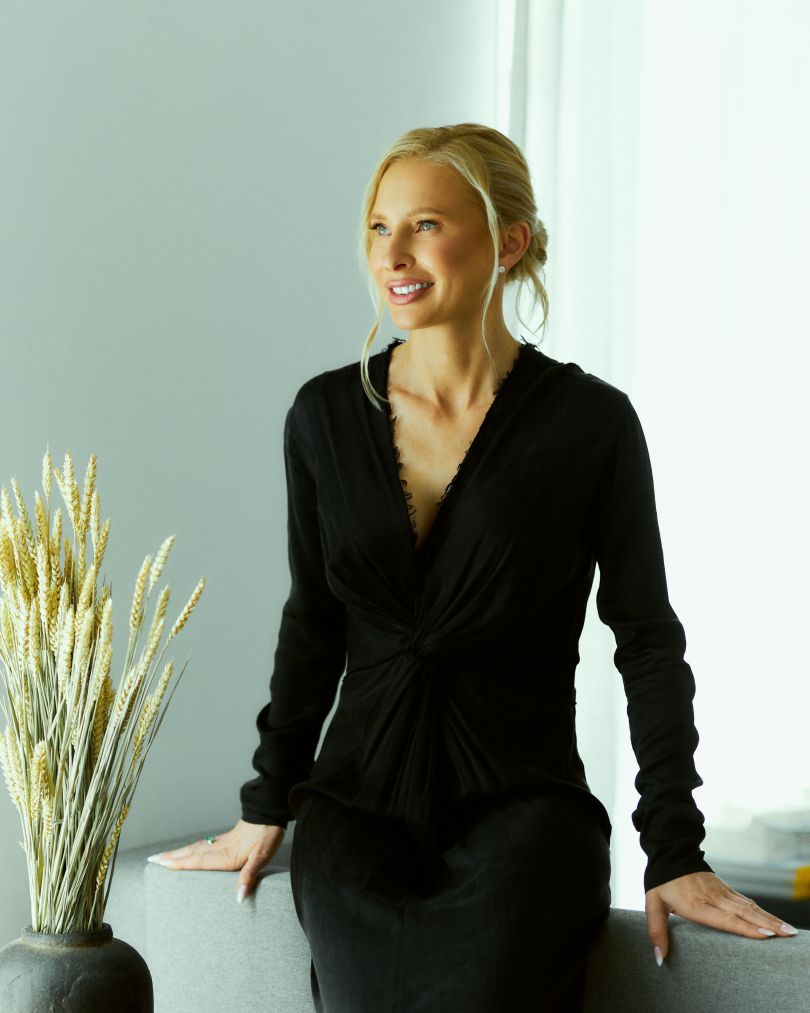
Much of our discussion centred on Ukrainian women - their partnerships, mutual support, and ability to transform the country and pave the way to victory. Listening to the dozens of projects and programmes Olga leads with her partners, you understand: Ukrainian women are capable of changing not only their country, but the world.
Impact Force embodies that change. Even before the full-scale invasion, Olga and her long-time partners brought together all their initiatives into one idea - to create a platform for systemic social impact. Not isolated projects, but a living system that evolves organically.
After 24 February, as the country’s priorities shifted dramatically, Nina Levchuk joined Impact Force - a partnership that elevated the organisation’s ability to advance mental resilience, economic independence, and community development.
I’m writing this the morning after one of Kyiv’s heaviest attacks. The horizon is filled with smoke, the smell of burning cuts through the scent of coffee, and social feeds are flooded with reports of destruction. It would be easy to lose hope. But just next door, at a school, children rehearse for the first bell - women’s and girls’ voices singing, laughing, drowning out fear. Mental resilience is our collective superpower.
How do we strengthen it - and scale it? Among other things, that is what Olga reflects on in our interview.
Before establishing the powerful NGO Impact Force, you spent many years as an entrepreneur. Tell us about your journey.
My entrepreneurial path began long before Impact Force. I always felt a drive to build and grow new things, so at different stages I launched several diverse businesses, explored new sectors, and worked across various markets and formats. This experience was invaluable - it taught me flexibility, fast decision-making, and how shifts in human behaviour shape business ecosystems.
Alongside this, I worked in a major national corporation where I was responsible for developing international and regional partnerships. That was where I saw how sustainable systems of cooperation between government, business and global institutions are built, and how essential trust and the ability to unite different stakeholders around a shared goal really are.
In the early 2000s, together with my partner Olga Danko, we founded OII Meaningful Communications - a communications agency built not on hype or noise, but on meaning, trust and responsibility.
Our ambition then - and now - was to transform communications into long-term relationships and tangible impact. We worked with government institutions, large businesses, media and communities, promoting the idea that communication should not distract but unite and drive change.
OII evolved alongside technology. We moved from traditional tools to sophisticated digital ecosystems - yet our working DNA never changed: discipline, integrity, high standards, attention to human values, and the vast social capital we built over the years. And above all - a genuine women’s partnership that has thrived for almost two decades.
In parallel, we developed Slow Food Ukraine - part of the global movement that preserves local products, food culture and identity. We supported farmers, promoted Ukrainian gastronomy abroad, organised festivals, and defended the right for Ukrainian products to be recognised as Ukrainian.
Another direction that profoundly shaped our later work was the development of mental resilience practices. After 2014, together with researchers, we began building an evidence base and encouraging cultural acceptance of meditation in Ukraine. This resulted in the Global Scientists for Peace Forum, open communication with thousands of people, and a partnership with the David Lynch Foundation, which enabled Ukraine’s first systemic meditation programme.
Over time, these spheres - communications, sustainable development, community work, mental resilience and international projects - converged into one coherent vision. That is how Impact Force was born: not as fragmented initiatives, but as an ecosystem for social impact that scales our experience across the country.
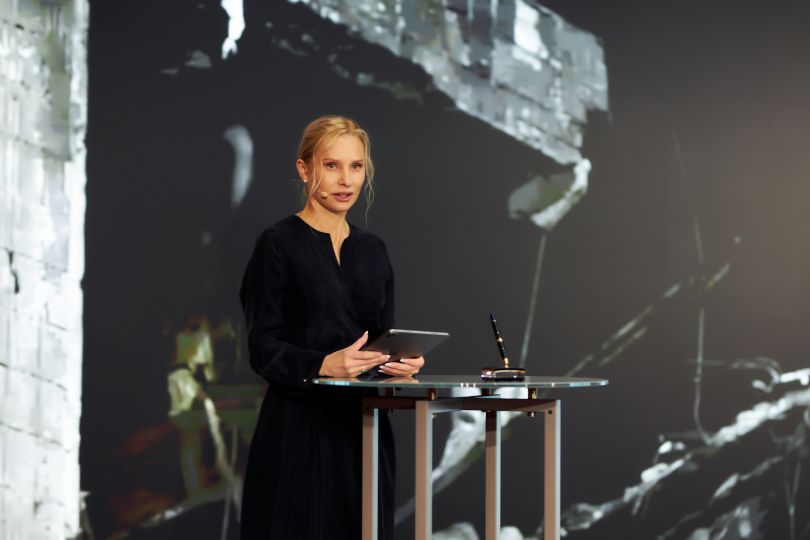
Did your understanding of women’s partnership begin forming back then?
Yes - and it evolved gradually, through real work and lived experience. My partnership with Olga has always been rooted in trust, openness and shared values. But it became truly profound when we became mothers. Motherhood confronts you with reality very quickly, and you realise you want the very best for your children: a safe country, quality education, a healthy environment and opportunity.
That desire isn’t something you can hand off to someone else. It pushes you to act - to work consciously toward change rather than wait for others to make it happen.
That was when we understood that any major transformation starts with shifts in behaviour and mindset - with the habits we cultivate in our families, teams and communities. How we treat one another. How we relate to health, responsibility and shared purpose.
This is deeply linked to national identity - to how we see ourselves and how the world sees us. A country’s reputation is shaped not only by government initiatives - it is built from millions of everyday choices people make. Every Ukrainian carries the image of Ukraine.
Gradually, we arrived at a key realisation: change must be created by us - for ourselves, for society, and so our children can grow up in a country that actually works. This became one of the foundations of our approach.
From here, our understanding of women’s partnership grew: it’s when women don’t just support each other, but intentionally unite to drive change - in how we interact, in social behaviours, in attitudes to ourselves and our country. When partnership becomes about responsibility, shared action and measurable impact.
We managed to build a team that has stayed strong for nearly two decades. A team of women who live these values every day. That, to us, is true women’s partnership - when change starts with you, but is made for the future of children and of the country.
I know you are also working on changing how Ukraine is perceived internationally.
Yes - and that became especially evident after 2014. I travelled widely, speaking with journalists, diplomats, and colleagues across Europe and the United States. And when I asked a simple question - “What do you know about Ukraine?” - the majority of responses were superficial: “Somewhere next to russia… beautiful women… Klitschko… Shevchenko the footballer.”
That was a sobering moment: the world doesn’t see us as we truly are - and only we can change that. But we also quickly realised something else: you cannot build a strong external reputation if deep transformation is not happening at home. A country’s international image is not about slogans - it is about how people behave, how we interact, our humanity, the strength of our communities, our mental resilience, professionalism, and our cultural and sporting standards.
The world sees Ukraine through how we show up every day. That is why our team deliberately chose to work on mindset - both individual and collective. This includes communication culture, business ethics, responsibility, and even sport, where my partner Olga Danko plays an active role in the National Olympic Committee and now she is a member of the European Olympic Committees’ Commission on Digital Technologies and Artificial Intelligence.
It was around this time that our partnership with Nina Levchuk began - she was already leading Google Leadership Academy. From our very first conversations, it was clear we shared common values and a shared vision: what a modern Ukraine should look like and how its reputation should be shaped - not through random associations, but through real change across society.
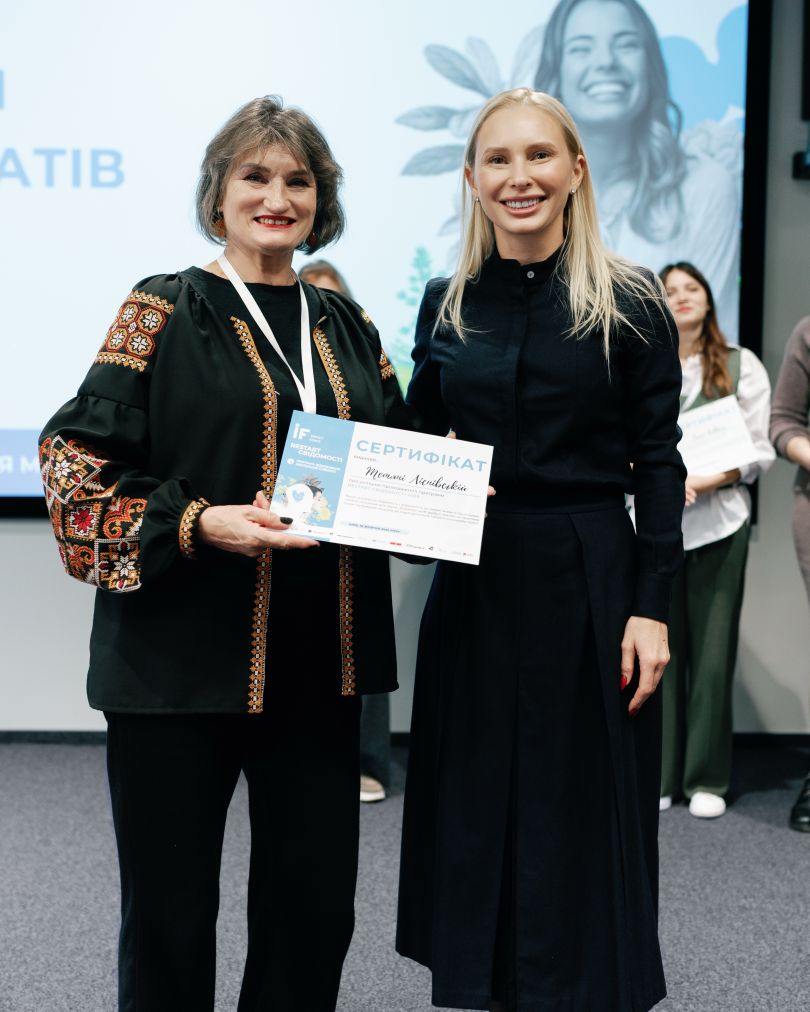
How did you meet Nina Levchuk?
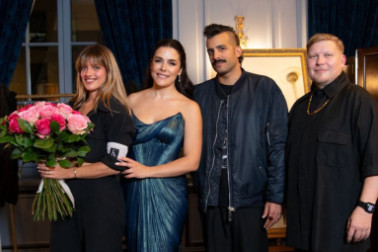
Quite unexpectedly - we literally ran into each other on a red carpet at an event. We were introduced as people who should have met long ago. And it really felt that way: the connection was immediate.
We started talking and instantly understood one another. Our values aligned, and so did our vision for the future. In how we approached leadership, how we treated people, and how we viewed development - we were heading in the same direction. Yet we also had a great deal to offer each other: different experiences, different ways of thinking, different professional tools.
So when the need arose to strengthen what we had already begun - our initiatives, projects, and approaches to mindset change and social transformation - the partnership emerged naturally. Ideas that had been forming within our team for years suddenly gained new momentum and scale.
How did the David Lynch Foundation enter your life?
After the war began in 2014, it became clear that Ukrainians lacked critical tools for recovery and resilience. People started approaching me, speaking about practices that could help the nervous system adapt to stress. At that time, meditation was viewed with a fair amount of skepticism in society, but scientific evidence was already compelling - in the United States, research had confirmed its effectiveness for veterans and military personnel.
We decided to approach it professionally - through evidence. So we organised the Global Scientists for Peace Forum, inviting experts from different countries. They presented real data demonstrating how mindfulness and restorative practices can reduce stress, strengthen resilience, and support people in difficult conditions. For us, this was a turning point: Ukrainian society was ready for something new - if you communicated through the language of science.
The next step was a trip to New York, where I met with the David Lynch Foundation team. I kept saying that skepticism still persisted in Ukraine. Their response was: “It was the same for us. Everything changes when people feel the impact.” They supported the idea of launching an initiative in Ukraine and promised to attend the opening.
When I came back and voiced the idea, things started moving very quickly. Businesses, media and opinion leaders joined in - VIVA journalists were among the first to respond, giving the event a strong communications boost.
Within a very short time, we managed to organise David Lynch’s visit to Ukraine. The interest was extraordinary: the halls of the Theatre on Podil and Planeta Kino were packed, people stood in the aisles, and thousands watched the online broadcasts.
It became one of the biggest events on mental resilience at that time - we reached almost every audience we had planned to.
Most importantly, we measured the outcomes. The data showed real improvements in resilience among people who practiced these methods. The Foundation continues its work today, supporting veterans, women and families experiencing trauma. We also helped launch a similar foundation in Georgia.
And this experience is now embedded in your current projects?
Yes. Before the idea of Impact Force emerged, we already had a strong foundation: communications and CSR work through OII, initiatives focused on sustainability and local identity, projects on mental resilience, a sports direction, and major national events - including the Kyiv Investment Forum and KIEF, which we organised for many years. These were powerful, influential streams of work, but they still existed separately - not yet integrated into a unified system.
Taking part in the How Women Lead programme in San Francisco became a key turning point. The mentors immediately recognised that everything we were doing - from communications and social impact to mental resilience, economic opportunity, and community development - shared the same value base. The idea wasn’t to invent something new, but to bring these elements together into an ecosystem with a shared direction and collective impact.
This is how Impact Force was born - initially as an internal platform giving structure and coherence to all our initiatives.
When the full-scale war began, the country’s priorities shifted dramatically, and it became clear we needed to work at a different scale. That was when our partnership with Nina Levchuk took shape naturally. Her experience, leadership and vision complemented exactly what we had been building, giving Impact Force new momentum and a new level of action.
Today, Impact Force integrates all these streams - communications, CSR, mental resilience, economic opportunities and community development - into a single platform that drives transformational change in social behaviour and delivers long-term social impact for Ukraine’s recovery.
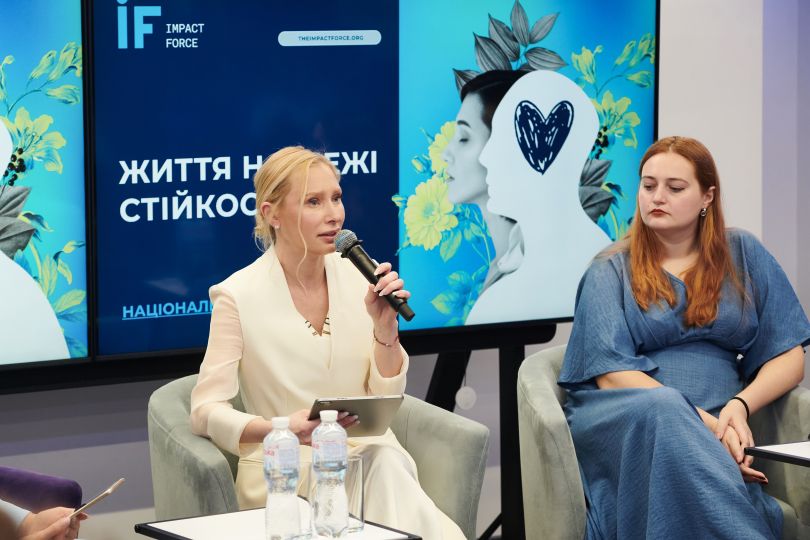
If you had to sum it up in a few words, what lies at the heart of the concept?
It all started with a simple but powerful insight: change in Ukraine begins with change in social behaviour and mindset. When people become more aware, responsible and resilient - when trust, empathy and the way we interact evolve - the quality of life improves, and so does the country’s reputation on the global stage.
We wanted to build a platform that helps Ukrainians cultivate these skills and habits - and that idea became the foundation of Impact Force.
But this, again, requires reaching the state level.
Yes - societal transformation doesn’t happen in isolation. It requires the involvement of government, institutions, business, communities, and international partners. That’s why Impact Force was conceived from the start as a collaboration platform. Today, we deliver our programmes with the support of the Ministry of Digital Transformation and other relevant ministries, as well as in partnership with UN Women, GIZ, Diia.Business, Diia.Education, the Ministry of Veterans Affairs, the State Agency for Energy Efficiency, specialised medical institutions, and major media. Alongside government partners, we work with private companies, diplomatic missions, and influential Ukrainian outlets - Mind, Rubryka, VIVA, and others.
Globally, Impact Force is part of a broad network of organisations shaping the future of social impact: Catalyst Now, SME Connect, the Schwab Foundation at the World Economic Forum, GLOBSEC, Gender Alliance, The Possible Alliance, the UN Global Compact Network Ukraine, and other international platforms promoting inclusive, human-centred, and sustainable recovery. This allows us not only to scale Ukrainian experience, but also to bring best-in-class global practices into the country.
One of our core priorities has become mental resilience. We understood that mindfulness or deep meditative practices represent an advanced stage - something society reaches over time. Meanwhile, Ukrainians needed a simple, accessible, evidence-based tool they could use daily and even in crisis situations.
That’s why we brought in scientists and, together with the Center for Innovative Healthcare Technologies of the State Administration of Affairs, developed a method for measuring stress resilience via heart rate variability - one of the most reliable indicators of nervous system adaptability. Using this scientific base, we created a mental relaxation technique which we then tested with veterans and hundreds of women in our “Dream and Achieve” and “ReStart Mindset” programmes. The results were clear: the technique helped restore stability, reduce tension, and bring back a sense of control even after difficult experiences.
Our task now is to make this tool part of everyday life for responsible Ukrainians. So we are working to integrate the methodology into healthcare, education, and social service systems - drafting policy documents, consulting with state institutions and academic bodies. And, of course, we hope for the support of the First Lady, because mental resilience is not only about individual wellbeing - it is a national resource without which Ukraine’s recovery is impossible.
And how do you personally keep yourself grounded?
Movement has always been part of my life. For me, sport isn’t about appearance - it’s about energy and inner balance. These days, that mostly means the gym: physical activity calms my nervous system and helps me stay focused. I realised long ago that the body and mind are inseparable, so maintaining that balance is essential for me.
I take a similar approach to food: simple, natural, locally sourced products - nothing extreme. At the same time, I really value what modern science has brought to wellness and beauty. In the past few decades, technology has advanced enormously, and smart use of innovation truly supports health, mental clarity and productivity. I want Ukrainians to have access to that - because resilience doesn’t start only with emotions, but with physical strength as well.
And of course, meditation. I’ve practised daily since 2013. I’ve explored many techniques - and I’m still learning and refining my practice.
Did you feel the results right away?
Yes. It’s one of those rare tools where the effect becomes noticeable very quickly. When I began meditating, I suddenly had more energy, I needed less sleep, and throughout the day I felt a sense of inner stability. Even if you work late and wake up early, you stay engaged and effective.
The mental relaxation technique we developed with scientists, which I recommend to everyone, lets you experience this shift almost immediately. It feels like a soft but deep reset. At the moment when you focus on your breath, which is essentially the meditative practice itself, you realise that your thoughts have quieted. The mental carousel stops. You come out of that pause in a completely different state, and the day unfolds differently. It becomes a different quality of life.
.jpg)
When will the technique be available to everyone?
It’s already available online __https://theimpactforce.org/tmr/_, and it is completely free. For me, it’s essential that resilience tools are accessible to every Ukrainian - regardless of profession, age, or life circumstances.
You mentioned you tested the method with programme participants and saw results. Is there a moment that stayed with you the most?
Yes - and even now, when I recall it, I feel a tightness in my chest. We often meet women who have lost more than one can fathom. But this story captures that fragile line between darkness and coming back to life.
She arrived at the first ReStart Mindset session almost mechanically. She sat quietly, shoulders lowered, and said: “I don’t know why I’m here. I don’t remember filling in the form. I have nothing right now - I just came.” There was no hope or anger in her voice - only emptiness. The kind of emptiness war leaves when it takes everything: home, familiar reality, work, a loved one, a sense of grounding.
In moments like that, you don’t search for the perfect words. You simply hold space - so someone can breathe, collect themselves just a little, feel safe for even a moment.
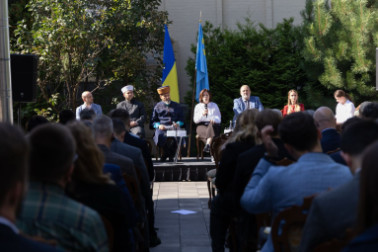
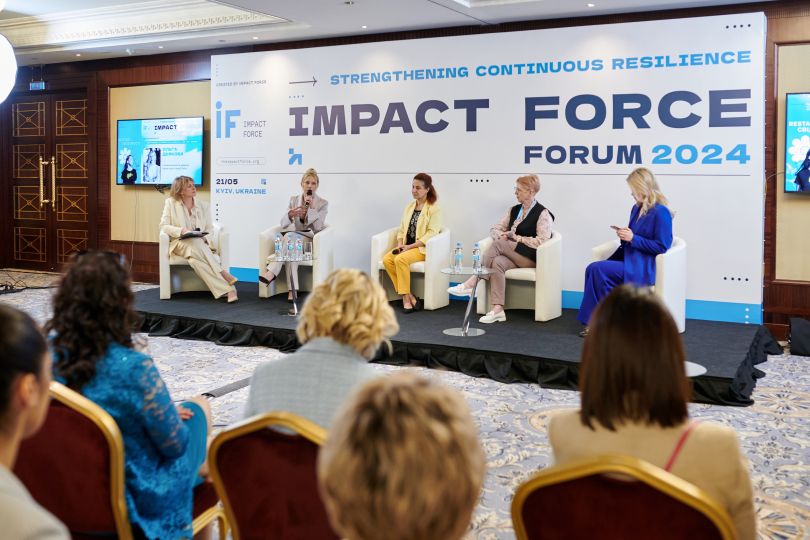
Six months passed. At the Impact Force Forum, where we traditionally gather hundreds of women from across our programmes, she suddenly asked to speak. She walked up to the microphone and said:
“Yesterday, I bought myself new lingerie so I could come here today.”
For a moment, the room went so silent you could hear someone inhale. And then- a wave: applause, laughter mixed with tears, strangers embracing her. Everyone understood: this wasn’t about a purchase. It was about returning to herself. About feeling alive again - a woman, a person with a future. About the fact that she now had a reason to “show up beautifully.”
It was one sentence - but behind it was an entire journey: from loss to dignity, from pain to warmth, from surviving to living.
And yes, for me it is one of the strongest proofs that we are doing the right work.
Because she herself came back to life…
Yes. It was a powerful sentence - and a powerful outcome.
You have many initiatives within Impact Force - let’s briefly summarise your areas of activity.
Impact Force isn’t about standalone programmes or one-off initiatives. We intentionally build an ecosystem where each direction reinforces the others - together shaping behavioural change, economic opportunity, and strong communities. Every project we run stems from one core belief: Ukraine’s recovery must be human-centred and sustainable, and resilience must be measurable and trainable.
Our first major area is mental resilience. ReStart Mindset became a space where thousands of women and female veterans received tools to overcome stress, return to work, and rebuild confidence. From this experience, we developed Impact Health - a national programme using our mental relaxation technique and scientific heart rate variability diagnostics. We are integrating it into healthcare, education and social services because we believe a strong society begins with a resilient individual.
The second direction is building the impact economy. Impact Business Accelerator has helped hundreds of entrepreneurs create businesses that pair profit with social value. Women in the “Dream and Achieve” programme regain economic independence and launch online businesses - even after losing everything in the war. Meanwhile, the “Energy Efficiency Innovators” programme strengthens Ukraine’s green transition by developing clean-tech infrastructure through solution acceleration and a national innovators catalogue.
The third direction is digital resilience and a culture of safety. Cyber hygiene is now a core part of our programmes - because you cannot speak about a resilient economy or mental wellbeing without knowing how to protect yourself online. Alongside this, we carry out advocacy and communications work to ensure digital security becomes not just a personal responsibility, but a national standard.
But the most important element is how all these areas interconnect. Our ecosystem approach operates across three mutually reinforcing levels.
We work with policymakers and government institutions - advocacy allows us to embed change within systems. We strengthen the capacity of people and businesses - through learning, mentoring, and practical tools. And we build communities - through forums, gatherings, national dialogues, and international platforms where trust and partnership take root.
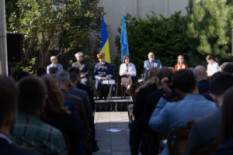
This is why we organise large-scale events like Impact Force Forum, Kyiv Investment Forum, and “Life at the Edge of Resilience,” where we convene government, business, international organisations and civil society. We also represent Ukraine’s priorities globally - at the World Economic Forum, Munich Security Conference, GLOBSEC, URC, Clinton Global Initiative - demonstrating that true national recovery starts with people, their behaviour, their opportunities and their cooperation.
So when we talk about Impact Force projects, we are really talking about a system - an environment that supports people at every level, from mental resilience and safety to economic opportunity and community strength. And that is how deep, lasting change takes root - change that stays with the country for generations.
At Impact Force, we have delivered:
• 2 seasons of the Impact Business Accelerator for Ukrainian entrepreneurs - with the third season launching this autumn.
• 2 seasons of “Dream and Achieve”, educational program for women entrepreneurs - with the third season now underway.
Applications are open at: https://t.me/dreamandachieve_bot
• 2 seasons of the “ReStart Mindset”, mental resilience recovery program.
• 1 season of Energy Efficiency Innovators.
Through our programmes, information campaigns, and educational series, we have:
• trained and equipped more than 1,300 entrepreneurs and people affected by the war with tools for growth;
• inspired and taught over 10,000 women entrepreneurs to develop their businesses online;
• accelerated the growth of 212 social and green enterprises.
We created Ukraine’s first National Catalogue of Energy Efficiency Innovators on the Diia.Business portal, with more than 80 companies already registered.
We have organised more than 10 national forums and international events, bringing together over 5,000 participants.
If we talk about future plans, does that mean scaling all your programmes and directions?
Yes - and we’re already in that process. Take the “Dream and Achieve” programme, for example. We didn’t just extend it - we reimagined its format and scale so that thousands of women could gain access to knowledge, support, and community. This year’s season is the most innovative yet: for the first time, the first stage is delivered through an AI chatbot that guides participants through learning, assigns tasks, gives explanations, and sends reminders. This allows us to reach far more women without sacrificing quality - in fact, it strengthens their personal development journey.
When we receive 1,500 applications, we understand two things: the social demand is huge, and our responsibility is even greater. That’s why we are working to ensure that automation and technology enable us not just to select “a few dozen” participants, but to open the doors to thousands. That is how the new format for the third season emerged, and why we are already planning for future cohorts where participation will be measured not in hundreds - but in thousands.
For us, scaling isn’t about “doing more,” it’s about “creating more opportunity” - building an environment where women can move at their own pace, but within the right system, with support, tools, and community around them. This fully reflects our ecosystem approach: we are not simply expanding programmes - we are building infrastructure for long-term, sustainable impact across the country.

And finally - what is your key message to Ukrainian women?
For me, it always comes down to one thing: coming back to yourself. No matter what happens around you, no matter what the war has taken from your life - there is something inside you that remains unbroken. Something no shelling, forced relocation, loss of work, or shaken confidence can take away. That something - is you.
Say to yourself, honestly and gently: “I am the most important person in my life.” Hug the little girl within you who today needs love and safety. Give yourself what you so readily give to others - care, compassion, attention.
Even if yesterday you lost almost everything - today you still have your body, your mind, your heart, and the strength to live one more day and take one small step towards yourself. That is the foundation. That is the starting point for growth. That is where recovery begins.
When you put yourself first - not out of selfishness, but out of love - you unlock a resource that changes everything: your life, the lives of your children and loved ones, and ultimately - the life of the entire country.
Love yourself. It is strength. It is a strategy. It is resilience. And it is what will carry all of us to victory.